Alpha · v0.1.0 · Apache-2.0
The AI access layer for enterprises.
A self-hosted gateway that decides who may use which AI models and work apps, sets spending limits, keeps an audit record, and removes access when someone leaves.
Why Ambit


| Without Ambit | With Ambit |
|---|---|
| Each team shares one provider API key, copied into scripts and laptops. | People sign in, or use a personal API key. Provider keys stay inside Ambit. |
| Anyone who has the key can use any model. | Access rules based on your identity provider's groups decide which models and MCP servers each team may use. |
| AI agents connect to work apps on their own, often through one shared service account. | Every MCP call passes one gateway. People connect their own app accounts, tools are checked, and personal data in results is masked. |
| The cost shows up on next month's bill. | Daily limits per group and per person, in requests or in dollars. |
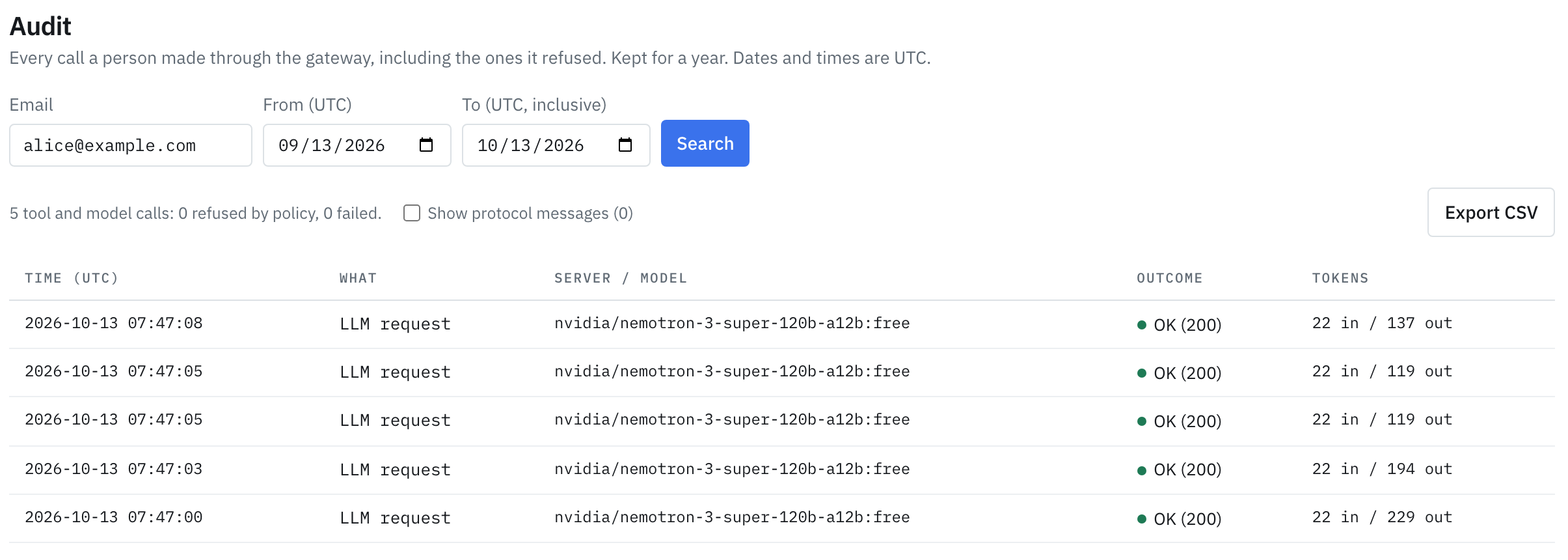
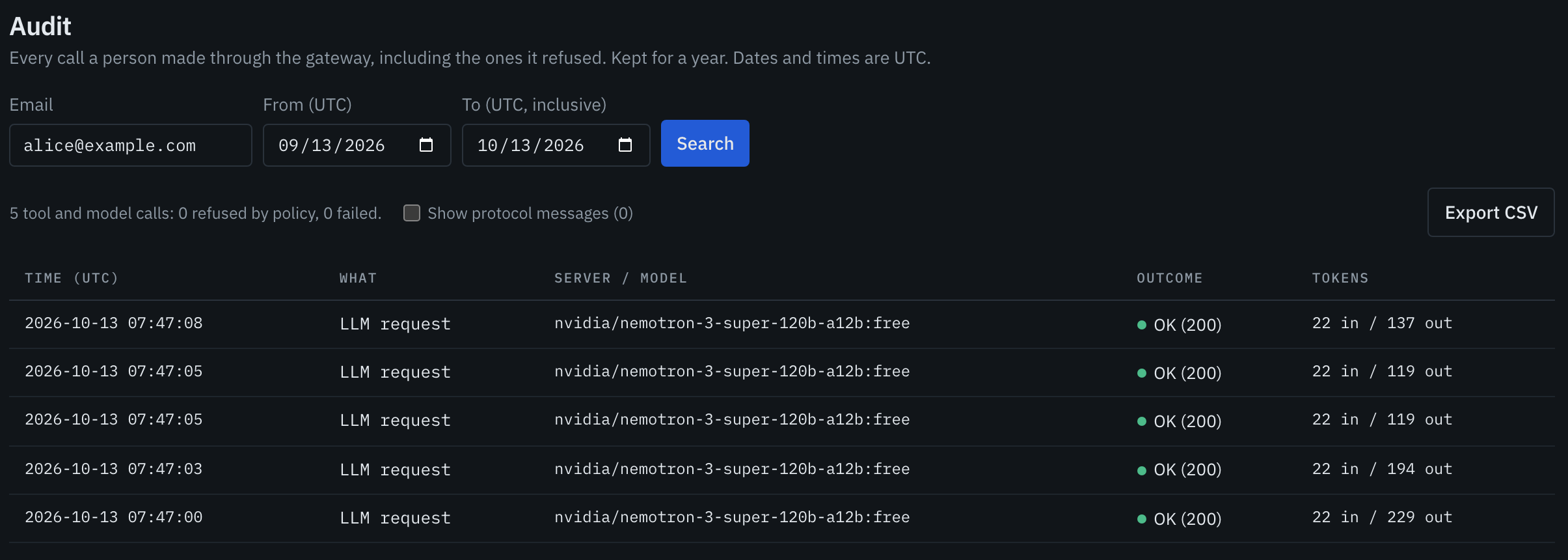
| Nobody can say who sent what to which model. | Every call is recorded, refusals included. Model refusals do not yet show who made them (an agentgateway bug; see Known limitations). |
| Someone leaves, and their keys work until someone remembers to rotate them. | The identity provider disables them, and their keys, sessions and app sign-ins stop at once. |
Use cases
Coding tools
Give Claude Code and Cursor a personal API key instead of a shared provider key.
Models per team
Allow each identity-provider group only the models it needs.
MCP servers for work apps
Let people connect their own app accounts, and allow only the tools you choose.
Spending limits
Set a daily limit per group and per person, in requests or in dollars.
When someone leaves
Disable the person in your identity provider. Their keys, sessions and app sign-ins stop at once.
Architecture


Blue is the path every request takes; grey is how admins and your identity provider set things up.
Built on
Ambit is built on these projects. Each keeps its own licence.
| Project | Use in Ambit | Licence |
|---|---|---|
| agentgateway | LLM and MCP traffic | Apache-2.0 |
| ToolHive | Runs MCP servers | Apache-2.0 |
| Dex | Sign-in and tokens | Apache-2.0 |
| Gateway API | Routing objects | Apache-2.0 |
| ClickHouse | Audit storage | Apache-2.0 |
| OpenTelemetry Collector | Audit pipeline | Apache-2.0 |
| Valkey | Budget counters | BSD-3-Clause |
| envoyproxy/ratelimit | Budget enforcement | Apache-2.0 |
| MCP Go SDK | Preset checks and test MCP servers | Apache-2.0 (older code MIT) |